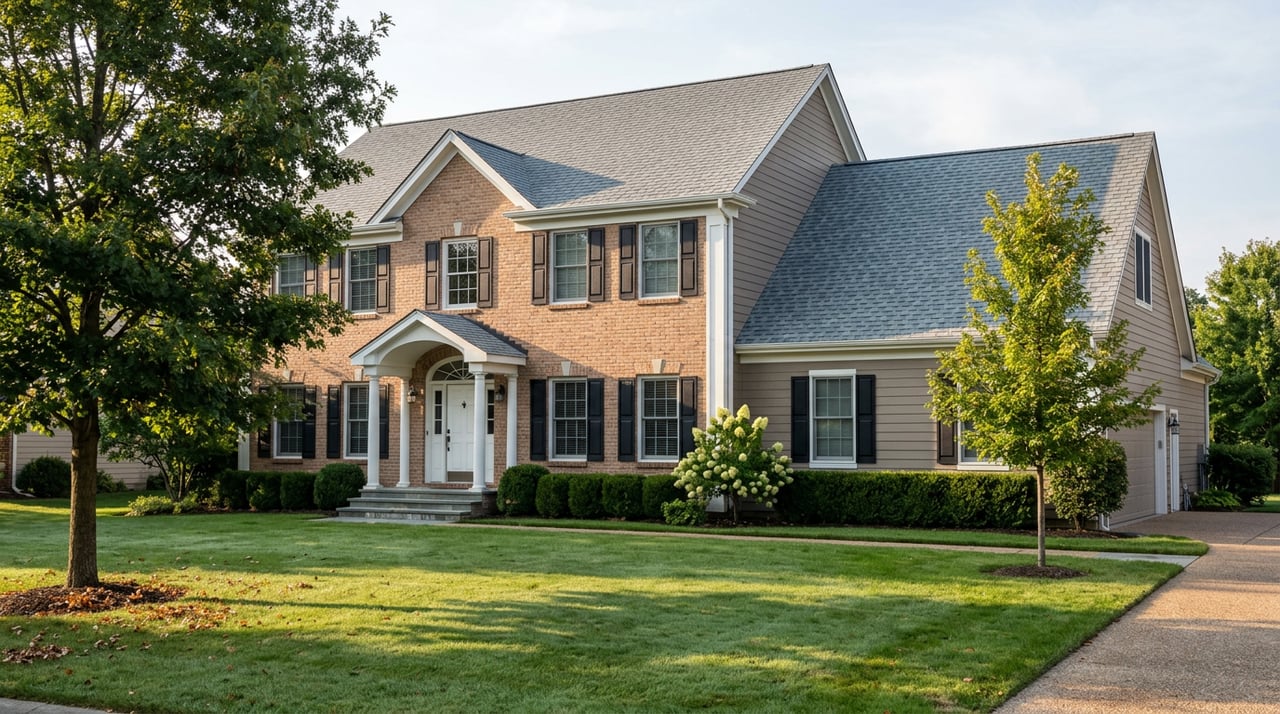
Cross-shop Morris Plains against Morristown for a single weekend and the pattern shows up fast. The Morris Plains listing runs meaningfully less per square foot than the Morristown listing two miles away. A buyer's first instinct is the same one that shows up in almost every suburban price gap: the high schools must differ, with the market pricing that difference in.
That comparison is incomplete here: public-school students from both towns attend Morristown High School.
Every Morris Plains eighth grader joins Morristown and Morris Township eighth graders in the same course catalog and extracurriculars, earning the same diploma. The price gap between the two towns is not explained by access to a different high school. The September 15, 2026, special election provides one example of how the towns differ in governance; Morris Plains residents were not eligible to vote in the referendum.
The Number That Doesn't Match the Story
As of July 31, 2026, the average home value in Morris Plains sat at $744,424, up 4.3 percent over the prior year. In Morristown, the same index put the average at $920,121, up 6.3 percent. That's a gap of roughly $176,000 between two towns that share a border, a commuter rail line, and, as it turns out, a high school.
Sale price data from late 2025 and spring 2026 tells a similar story with more texture. Morris Plains homes sold for a median of $745,000 in December 2025. Morristown homes sold for a median of $810,000 over the three months ending in May 2026. Per-square-foot pricing shows the widest spread: Morris Plains sales were running around $374 per square foot in that same window, while Morristown's per-square-foot figure was reported as high as $576 in one dataset and closer to $387 in another pulled a few months later. That's a wide enough range to name plainly. When per-square-foot numbers swing that much between snapshots taken months apart, the mix of homes that happened to sell shifted more than the underlying market did. Morristown's housing stock ranges from modest starter homes to properties well above $1.5 million, and which end of that range closes in a given month moves the average more than any single trend line.
Morris Plains has its own internal spread. Downtown, in the walkable core near what locals call the Merchant Block, older homes and smaller lots have historically sold on the lower end of the borough's range. Newer construction pulls the other direction. The Collection at Morris Plains, a townhome development with three-story end units built in 2023, has listed three-bedroom, three-and-a-half-bath layouts with two-car garages. The Powder Mill section has produced colonial listings topping 4,000 square feet of total living space. A borough with homes near Franklin Place dating back to 1900 on lots under a fifth of an acre, sitting alongside brand-new three-car-garage colonials in the same zip code, is not one market. It's several, averaged together.
None of that, though, explains the gap between the two towns. Both towns send public-school students to Morristown High School, so access to a different high school does not explain the premium.
What the Boundary Actually Draws
Morris Plains runs its own small K-8 district. Mountain Way School handles pre-K through second grade. Borough School covers third through eighth. Combined enrollment across both buildings runs around 600 students, which makes Morris Plains one of the smaller school systems in Morris County by headcount.
It has no high school of its own. It has never needed one. Since long before most current homeowners bought their properties, Morris Plains has operated under a formal sending and receiving relationship with the Morris School District, the same district that runs every grade level in Morristown and Morris Township. Every graduating Morris Plains eighth grader is sent to Morristown High School. The district on the other end receives them, no different from a Morristown or Morris Township student walking in the front door.
For high-school access, a buyer choosing between a Morris Plains address and a Morristown address is choosing between homes that both lead to Morristown High School. Same building, same course catalog, same extracurriculars, same diploma. The address still matters for governance, but not for which public high school students attend.
The September 2026 Morris School District Bond Referendum
The referendum also illustrates a governance distinction in the sending-and-receiving arrangement.
On September 15, 2026, the Morris School District put a bond referendum in front of voters. The projects on the ballot included work at these buildings: Alexander Hamilton Elementary, Alfred Vail Elementary, Hillcrest Elementary, Normandy Park Elementary, Sussex Avenue Elementary, Thomas Jefferson Elementary, Woodland Elementary, and Frelinghuysen Middle School, plus additions and site work at Morristown High School itself. The state had already approved roughly $136.6 million of the proposed work as eligible project costs, with debt service aid expected to offset part of the bill.
Only registered voters in Morristown and Morris Township were eligible to cast a ballot. Morris Plains residents, including those whose children attend Morristown High School, were not eligible to vote. Under this arrangement, Morris Plains residents are not part of the electorate for the receiving district's bond questions.
Morris Plains also has representation on the Morris School District's board of education: nine elected members, split five to Morris Township and four to Morristown based on population, plus a tenth seat appointed by Morris Plains to represent its interests. Bond questions are decided by voters in Morristown and Morris Township.
Morris Plains and Morristown share access to Morristown High School, but their residents have different eligibility for Morris School District bond questions.
What This Means If You're Comparing the Two Towns
For a buyer weighing Morris Plains against Morristown, the practical takeaway isn't that one town is a better deal in some abstract sense. It's that the deal is specific, and it's worth pricing correctly.
- The high school access is identical. Any premium you pay for a Morristown address over a comparable Morris Plains address is not purchasing a different secondary education. It's purchasing something else, whether that's Morristown's downtown retail density, its own K-12 governance, or simply a different slice of housing stock.
- Bond voting eligibility differs. Morris Plains residents are not eligible to vote on Morris School District bond questions, even though Morris Plains public-school students attend Morristown High School. That's worth knowing before closing, not after the next referendum notice arrives.
- Averages hide the real comparison. A Morris Plains buyer looking at new construction in Powder Mill or a Collection at Morris Plains townhome is not competing against the borough's oldest bungalow stock. Compare against homes of similar age, size, and section, not the town-wide median.
- NJ Transit's Morristown Line runs through both towns, with its own Morris Plains station, so commuter access is close to a wash for buyers prioritizing rail service into New York.
None of this makes one town the objectively better purchase. It makes the price difference explainable, which is different from defensible in every case. A buyer who understands they're paying a Morristown premium for something other than school access can decide, with open eyes, whether that something else is worth it to them.
A Few Questions Worth Asking Directly
Do Morris Plains students really have no other high school option? Public school students in Morris Plains attend Morristown High School through the sending and receiving relationship. Families who want a different public high school would need to pursue New Jersey's interdistrict school choice program or a private option, the same as families in any sending district.
Did any Morris Plains residents get to weigh in on the September 2026 bond at all? Not through the ballot. Eligibility for the special election was limited to registered Morris School District voters residing in Morristown and Morris Township specifically.
Does Morris Plains have any formal say in how the shared high school is run? Yes, through one appointed seat on the Morris School District's nine-elected-member board, distinct from the five Morris Township and four Morristown elected seats. That seat carries a voice in board discussions but not a vote on referendum questions, which go directly to the electorate in the two municipalities that fund the district through direct taxation.
If you're trying to figure out what a Morris Plains or Morristown price tag is actually buying, and how that fits your family's timeline, Jillayne Southren has spent decades pricing homes on both sides of that line. Reach out for a free home valuation or a personal consultation before you make your next move.
This article is general information, not legal, tax or financial advice. Consult a qualified professional about your situation.